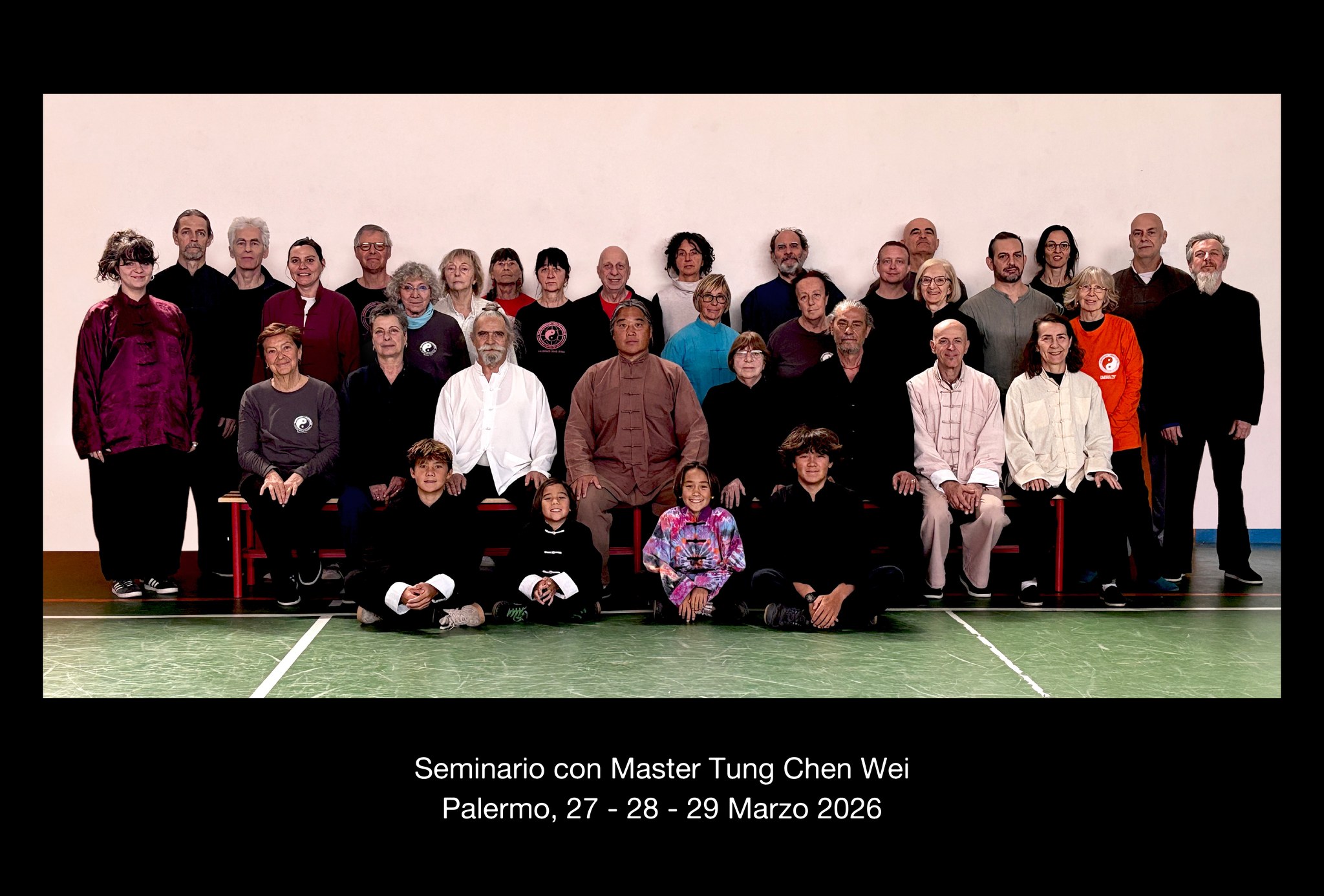
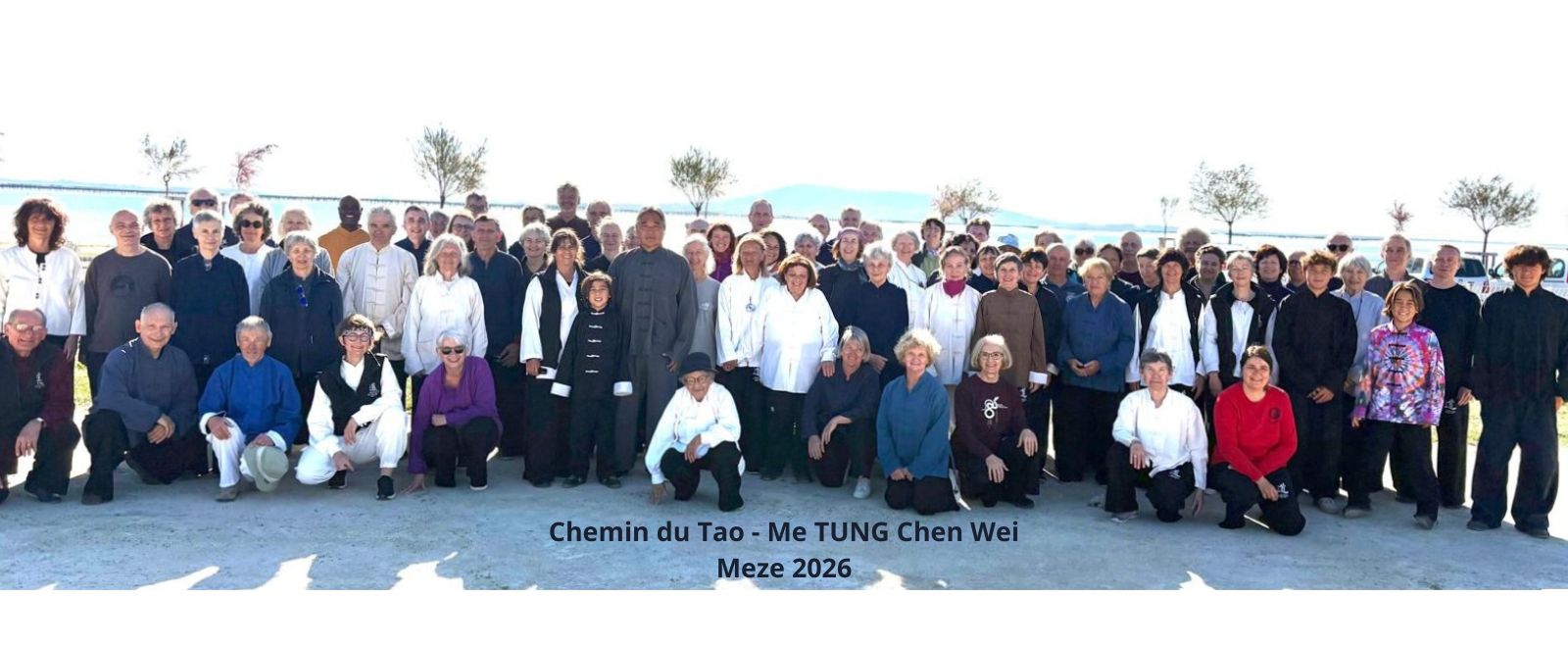
I really seem to like taking my time to absorb, process, internalize, and practice what I've been taught, but now it's time to share what I remember from the last workshops in Palermo and Mèze.
For this trip to Europe, the master brought all four of his sons with him. It is nice to see them grow. The oldest son is already taller than me, and the youngest practiced almost everything that the other students did.
In Palermo, we practiced quite a lot 推手 tuīshǒu. This time, as a new to some students, we practiced pushing with the wrists of the opposite hands - right with left and left with right. Here, you push your partner's wrists while shifting the weight forward, and yield by turning your hands on top while shifting the weight back.
First, practice only to one direction, circling your wrists from the inside or the outside. After getting comfortable with one direction, practice the other. Just like with one hand push hands, come on top to have the upper hand - literally. Always keep contact. Don't slide. Bend your wrists. Keep your palms down. Not too high or low. Later, you can open the practice more by playing with the directions and mixing the rythm.
In our school, we usually start push hands with taking contact with one hand, but in other styles you can see practitioners starting directly with both hands, like in this excercise, as the master told us.
In Mèze, we practiced three steps and four corners a lot. Last year, we already had a demonstration of how to change from three steps to four corners, how to change direction in four corners, and how to get back to three steps. That seemed to be a taste of what was coming, because this time we practiced those together.
We started solo four corners with a count. The first is to raise your hands and bend your knees, or later step close to the other foot, either next to it or behind it. With a partner, we start close and take a contact on the first count. On the second count, the same side hand circles and the foot either turns or takes a long step. The other elbow goes toward parther's face, 肘 zhǒu. The third count is also a long step, with a big pull, 大捋 dà lǚ, or a shoulder strike, 靠 kào.
With a partner, the turns and steps are not at the same time, like in three steps. In the beginning, one person turns first so the other knows to step. The same applies to the other counts: the one moving backward steps first while performing their movement, and the other follows with a counter movement. Always do smooth and soft. Don't go up and down. Stay on the same level.
When we change direction in four corners, the hands move almost the same as in three steps, and both just take a step next to the other foot. You can even make a few circles here before pulling back to the corner. You can also change direction back, or your partner can pull you to the opposite corner.
There is a lot more I remember, but remember by yourself was one of the teachings as well. Maybe you remember something that I don't. And probably none of us remembers everything. First learn to remember, then do better. In the old days, a master might show a movement maybe only once or twice, and if you didn't remember from that, you couldn't really learn. You shouldn't need anyone to show you how to practice, nor should you need to watch anybody while practicing - not even the master.
Also you shouldn't help other students too soon. Give them time to remember. And you shouldn't help anyone who is demonstrating - let the master do the teaching. Just watch. Maybe next time they will do it right. You can learn and correct yourself just by paying attention. Being conscious and focused makes it easier to remember. Practicing helps memory. If you don't remember, practice what you do remember.
Usually, the requirements for seminars and camps is to remember the slow and fast sets, not just to be able to follow. So start by remembering them very well on your own. And remember to practice partner excercises outside of class with your roommate, as the master reminded us.