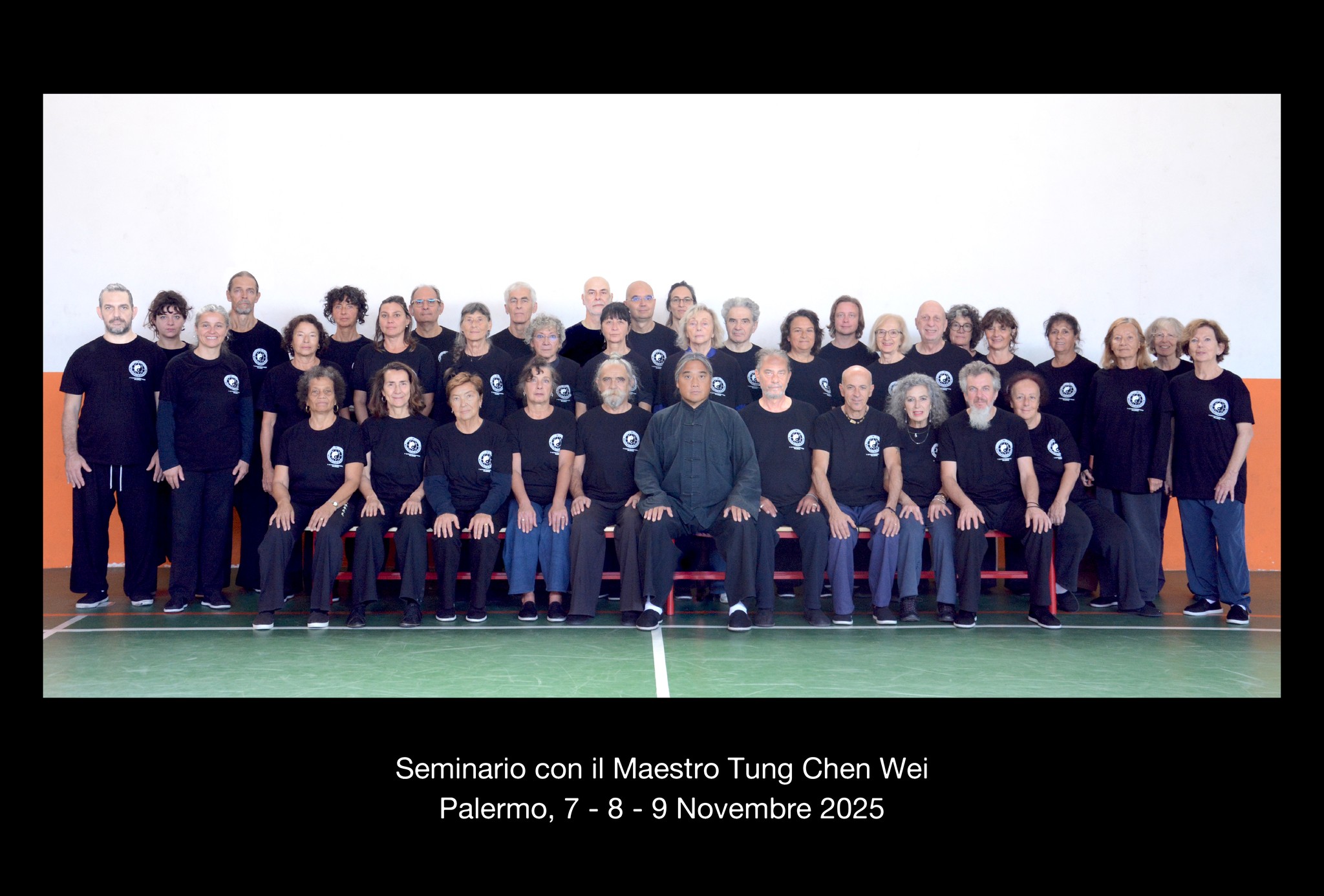
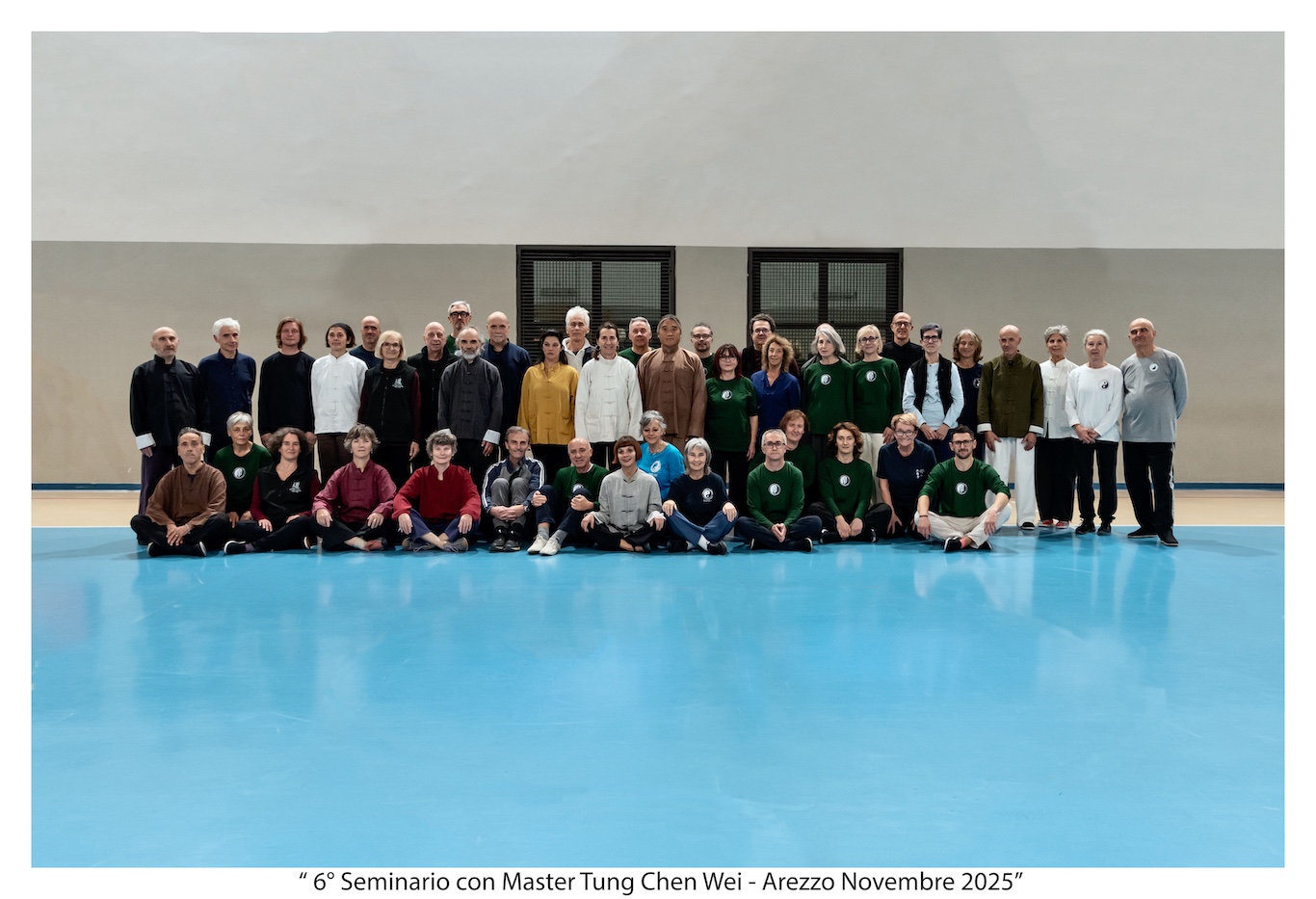
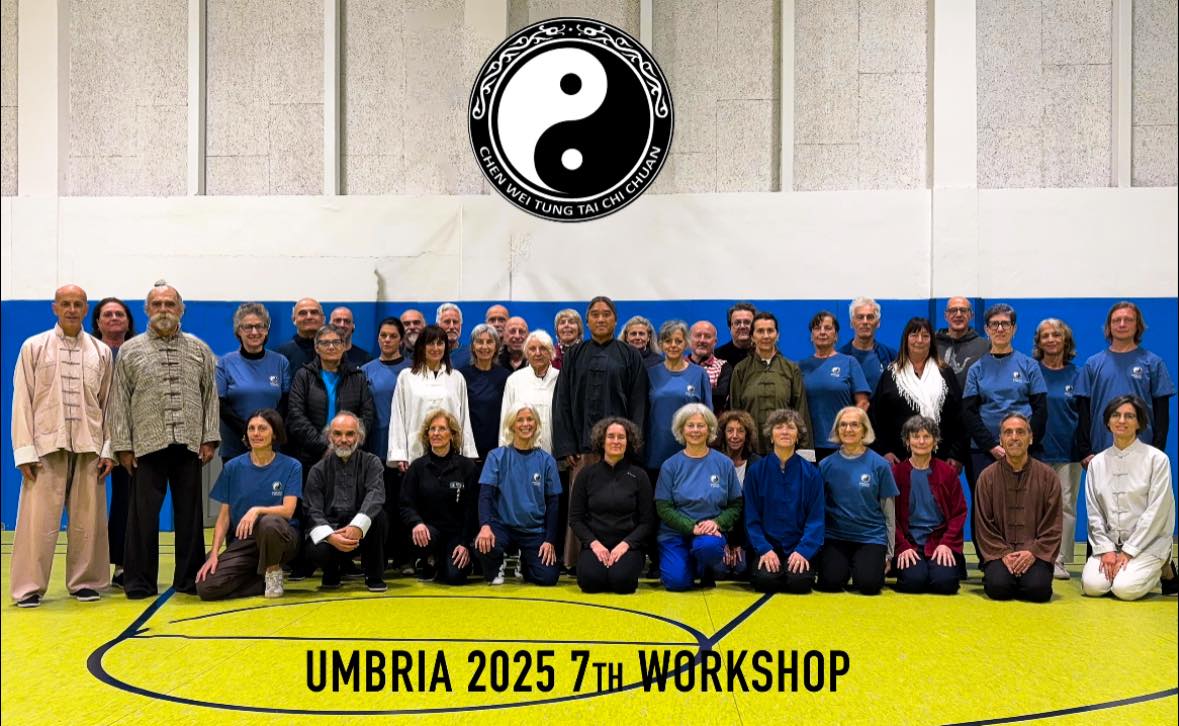
November seems to be one of the busiest month for me. This time I had twenty-six classes in six different locations. Concidering that there were only about five people in all three places in Italy, and six people in Copenhagen and Helsinki, while most of the classes had more than thirty students, there were a very many people in total.
We practiced every day shifting weight forward, 弓腿 gōng tuǐ, sitting on your leg, 坐腿 zuò tuǐ, and turning the waist, 转腰 zhuǎn yāo. That's where all practice begins - in any form and in push hands, 推手 tuīshǒu.
We focused a lot on push hands, contact, distance, and solo. We practice solo, so you can practice home alone, as master said. That's also how we begin the slow set as well - practicing by yourself. Only after that can you match with others. First connect with your own body, and then with a group.
At the very beginning of push hands, the weight is more back, but the first thing is either to shift your weight forward and press, or to turn your waist and roll back. The weight is back, zuò tuǐ, only in rollback, 捋 lǚ, and in front, gōng tuǐ, in every other move, 擠 jǐ, 掤 pèng, and 按 àn. Jǐ and lǚ always go together, and àn and pèng always go together. Also, you always turn the waist before shifting the weight - whether from back to front or front to back.
In this push hands practice, always continue in the same direction, clockwise or counter clockwise, until you change direction. And when changing direction, if you are back you always go forward, and if you are in front you always go back. Changing direction is the same as beginning: you either press, jǐ, or pull, lǚ.
Practice on your own, like master said, especially how to start. You cannot do wrong direction. From the beginning, the press is always gōng tuǐ, and rollback is always zuò tuǐ. Push longer, but don't push too much. Pèng isn't too loose. Keep your whole body connected. Don't slide. Don't lose contact.
One new detail I had never really embodied before was to always lǚ before àn, meaning every push starts with a little pull. The same applies to all forms and to push hands as well. Try it. Your body will find it.
It's funny how the body remembers what the mind does not. Like if you try to recall everything you were taught in a class, it can be hard, but when you practice, the corrections and teachings just pop up in the places they belong. I guess everything leaves a mark - memory is physics after all. Sleep on it. Feel on it.
Well, maybe that's enough about the body. Next week, we'll go through our minds.