It's been very dark, cold, and wet in Finland. In Finnish, we have a unique word that describes what it really takes to get through the polar night: sisu, which I would translate as perseverance. It's very close to Finnish mentality, but I've felt a slight lack of it after returning home.
I've been talking a lot about the body, but the body wouldn't do much without it's operational element - the mind. Use your mind, like master said. The mind is about motivation, inspiration, imagination, thinking, and concentration. Always fully focus on the task you are doing. And there are so many things to focus on.
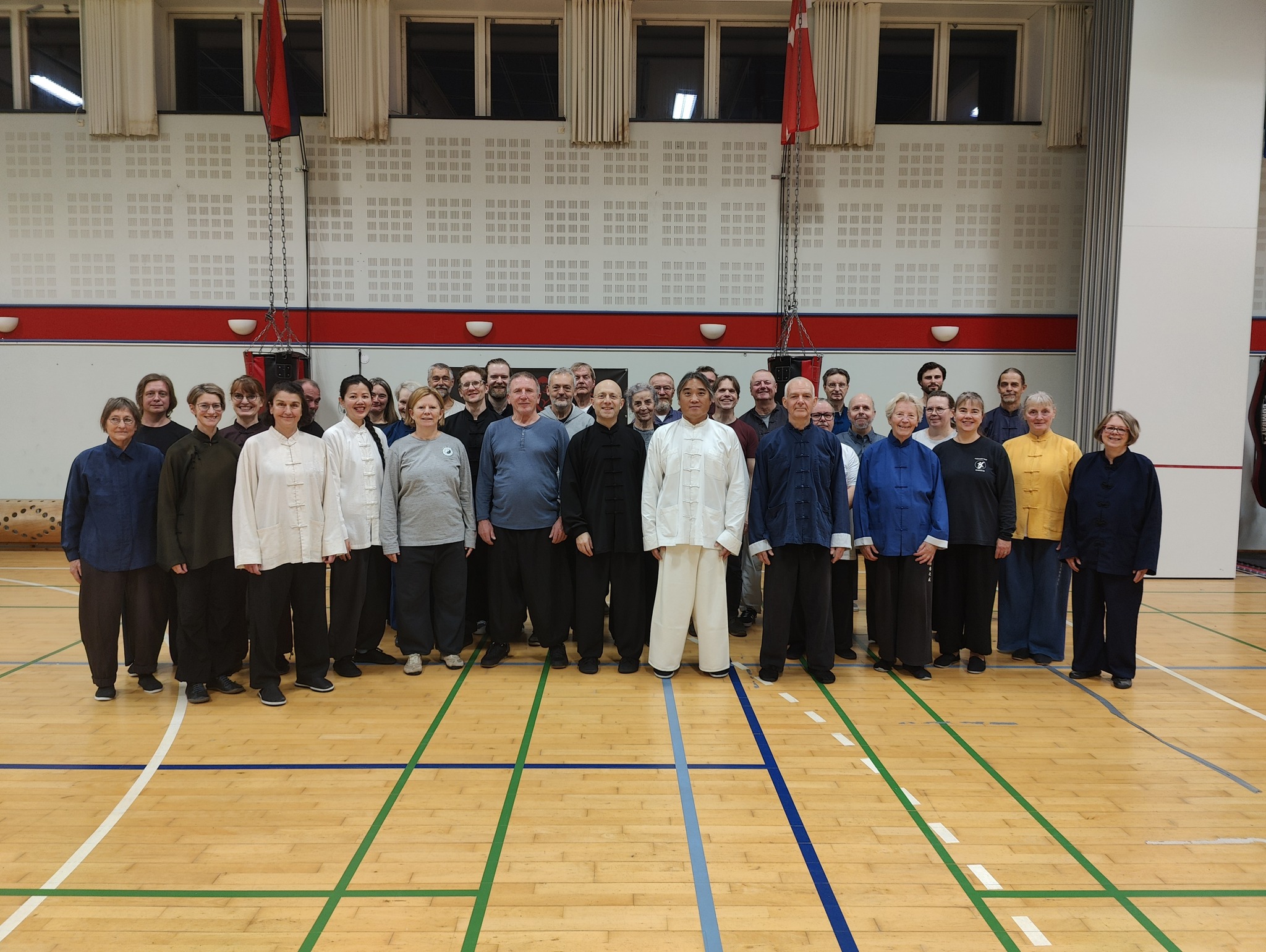
In Copenhagen I focused more on one movement than the others, and that was single whip, 单鞭 dān biān. Shift your weight back. Straighten up slightly. Turn your waist. Watch your left hand. Turn your right foot. Circle while turning. Turn your waist again. Watch your right hand as it makes a small circle and pushes with the back of the hand, straightening the arm - but not too much - wrist above and elbow below the shoulder. Shift your weight. Pick up your left heel. Turn on your left toes, then pick them up keeping the left knee in front of the body. Turn and open the left side to step, and circle your left arm in front of your chest keeping it round and close to the right hand. Watch your left hand. Open your waist. Shift your weight. Bend your left wrist to push. Yet it's not that simple - these phases should slightly overlap, happening at the same time.
In the last post, I already mentioned that we practiced a lot of push hands, 推手 tuīshǒu. One way to fully engage your mind in this practice is to work with distance. That requires more focus, as you must listen and communicate without words or touch. Stay together with your partner, as master said. Begin at the same time, first raising your hands a little. Bend your knees while staying at the same height. Take the first step with the same foot at the same time. Watch what your partner is doing and do the counter movement at the same pace. Shift your weight and turn your waist together.
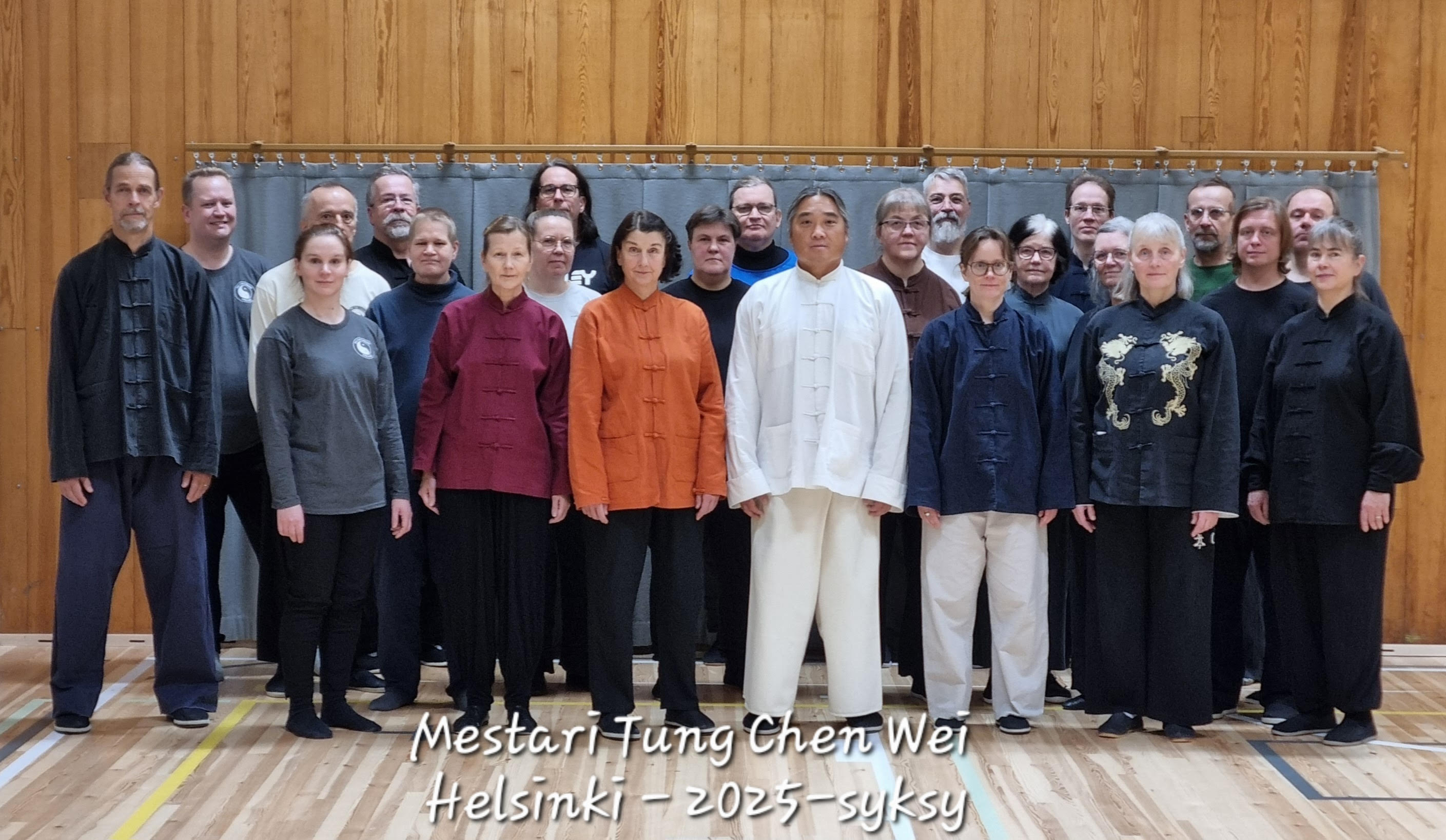
Follow your partner, as master also said. This is all about: If you don't move, I won't move. If you move, I'll move first. 你不动。我不动。 你欲动。我先动。 Nǐ bù dòng, wǒ bù dòng. Nǐ yù dòng, wǒ xiān dòng. It also helps to practice everything clearly and smoothly. Make it a game, a play of following and controlling.
In one class in Helsinki, we also had beginners. That brings me to the concept of beginner's mind. It simply means having no expectations, being receptive - even enthusiastic. Open your mind. Think yourself.
In Helsinki, I taught fast set to one new person. While teaching, I also try to see what's going on in my student's mind. Be conciderate that everyone has their own mind, their own challenges and triumphs. I also received valuable corrections on my teaching.
Meditation has changed my life in recent years, and I've realized it has nothing to do with controlling the mind, but with listening without judgment. Do not try to control your thoughts. Simply do not let them control you. Become fully aware. Experience your mind totally. It's the silence between the thoughts. Quiet your mind so it doesn't become too lazy or too talkative - not mind full, but mindful. Go forward. Go beyond. Let your imagination fly - that's what the mind is made for.
And as one of my teachers famously said: The mind is everything. What you think you become. I've had my missteps, but what really matters is how you approach things - the attitude. One mind. Don't doubt. Don't try. Do.
有人若无人。无人若有人。